
Questions About Dry Ice Blasting Cleaning Services
Questions About Dry Ice Blasting Cleaning Services
Is Dry Ice Blasting Cleaning Able To Be Performed Indoors?
Yes, dry ice blasting can absolutely be performed indoors, and it is one of the most effective interior cleaning methods available for industrial, commercial, and even select residential environments. Because the process is dry, non-abrasive, and free from toxic chemicals, it is uniquely suited for facilities that must maintain cleanliness without introducing moisture, grit, or harmful residues. Manufacturing plants, food processing facilities, automotive operations, packaging plants, warehouses, and mechanical rooms frequently rely on indoor dry ice blasting to maintain equipment and building surfaces without shutting down operations for extended periods.
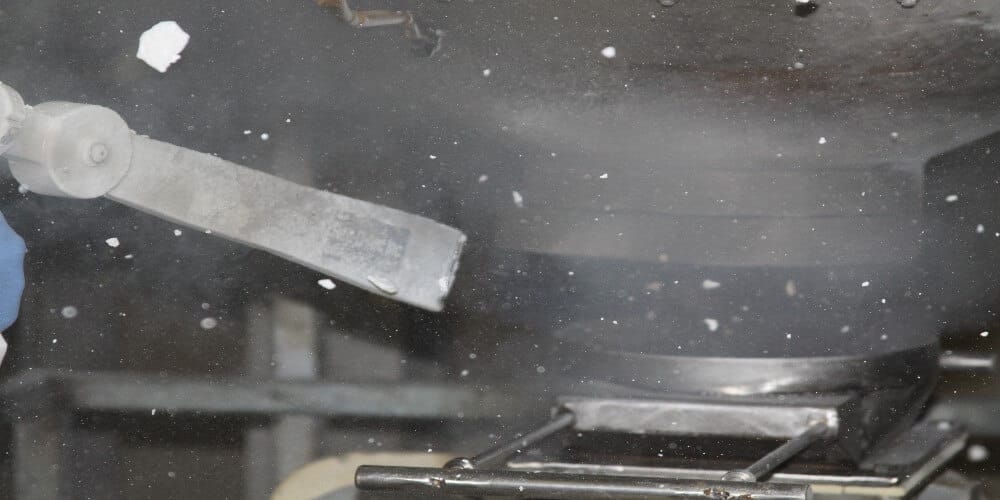
Dry ice blasting works by propelling solid CO₂ pellets at high speed toward a contaminated surface. Upon impact, the pellets loosen and lift debris, then immediately sublimate transforming from a solid directly into gas. There is no liquid phase, no soaking, and no leftover blasting media to clean up. The CO₂ simply dissipates into the atmosphere. When performed by trained technicians using proper personal protective equipment (PPE), the process is safe for employees and can be conducted in active work environments with minimal disruption.
During Dry Ice Blast Cleaning What Happens to the Grease, Oil, Dirt Removed?
During the dry ice blasting process, most loosened dirt and dry debris fall directly to the floor, where they can be easily swept or vacuumed. Since no water or chemical cleaning agents are used, there is no sludge or contaminated wastewater to manage. This significantly reduces post-cleaning labor and disposal costs.
For wet or oily areas, surfaces are typically prepared in advance to optimize results. Excess oil may be wiped or contained beforehand, and heavily greased areas can be pre-treated if necessary. As the dry ice pellets impact the surface, grease and oils are broken free and directed into manageable collection zones. This controlled removal process makes cleanup straightforward and efficient. Instead of spreading contaminants around with water or solvents, dry ice blasting isolates and removes buildup with precision.
Industries ranging from automotive manufacturing to food production rely on dry ice blasting for heavy-duty grime removal. It is especially valuable where hydroblasting or chemical cleaning would create overspray, corrosion risks, or wastewater management challenges. By eliminating moisture and harsh solvents, facilities gain a safer, more controlled cleaning solution.
Afterwards, What Happens to All The Dirt and Debris?
Once blasting is complete, all removed debris can either be disposed of on-site or properly contained and transported off-site according to customer requirements and environmental regulations. Since the dry ice itself evaporates, the only waste generated is the original contaminant. This dramatically simplifies disposal procedures compared to traditional blasting methods where media becomes a secondary contaminant.
Professional crews are trained to maintain clean job sites. Debris containment, collection, and compliant disposal are standard parts of the service. The result is a cleaner environment without piles of spent grit, chemical runoff, or excessive waste handling.
For a Dry Ice Blast Cleaning Crew to Operate Effectively, What Are the Requirements?
Professional Michigan dry ice blasting contractors provide all necessary equipment, including blasting units, air compressors, pellet delivery systems, and containment materials. Proper ventilation is assessed prior to beginning work to ensure safe CO₂ dispersion, especially in enclosed spaces. Technicians wear appropriate PPE and follow established safety protocols to maintain a secure working environment.
Because the process produces no sparks and is non-conductive, it is safe around electrical systems and sensitive machinery. Teams operate efficiently, minimizing disruption to daily operations and maintaining a clean workspace throughout the project. In many cases, equipment can be cleaned in place, reducing the need for teardown and reassembly.
Addressing Thermal Shock Concerns
Some companies considering indoor dry ice blasting are concerned about the effect of cold temperatures on metal surfaces. Research and field experience show that the temperature drop occurs only at the contaminant layer and surface level. The underlying substrate does not experience structural thermal stress. Because the pellets sublimate instantly, there is no prolonged freezing effect. This makes the process safe for most metals, composites, and delicate mechanical components.
Common Indoor Applications for Dry Ice Blasting
Dry ice blasting is widely used across numerous industries and applications, including:
- Automotive manufacturing and restoration
- Contract industrial cleaning
- Food and beverage processing
- Plastics and composite production
- Adhesive and sealant removal
- General equipment cleaning
- Mold remediation and surface preparation
- Production line sanitation
- Electrical panel and motor cleaning
Its ability to reach tight spaces, complex machinery, overhead ducting, and sensitive components makes it ideal for facilities that cannot risk damage or moisture exposure.
Key Benefits of Indoor Dry Ice Blasting
- No water, grit, or chemical solvents
- Non-conductive and safe around electrical systems
- Reduced downtime with in-place cleaning
- Minimal disassembly required
- Environmentally responsible process
- No exposure to corrosive cleaning agents
- Eliminates secondary waste streams
- Preserves sensitive machinery and surfaces
- Saves time, labor, and overall operational costs
Because there is no abrasive action, surfaces maintain their original integrity. Paint, coatings, and precision-machined parts are not etched or worn down. Equipment lasts longer, and maintenance intervals can often be extended.
Conclusion on Dry Ice Blasting Cleaning
Indoor dry ice blasting is a safe, efficient, and environmentally responsible cleaning solution for a wide range of industries. By eliminating water, chemicals, and abrasive media, it reduces downtime, minimizes waste, and protects valuable equipment. Facilities can restore cleanliness and operational efficiency without extended shutdowns or costly disassembly.
When performed by experienced professionals, dry ice blasting allows businesses to maintain peak production standards while improving safety and compliance. If you are looking to reduce cleaning downtime and get production running sooner, dry ice blasting may be the ideal solution for your facility.