
Eliminate Watt Loss in Substations Using Dry Ice Blasting
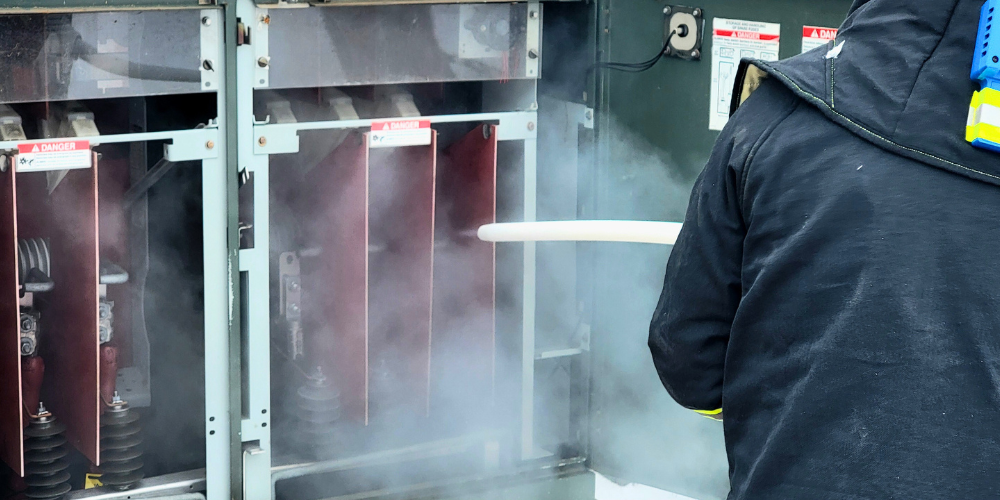
How Dry Ice Blasting Rewrites Substation Efficiency and Safety
Electrical substations are the silent workhorses of modern infrastructure, moving enormous volumes of power every second. Yet behind the hum of transformers and switchgear lies an often overlooked problem that quietly drains performance and increases danger. Contamination buildup on critical components does more than make equipment look dirty. It steals usable energy and creates the perfect conditions for catastrophic failure.
Forward thinking operators are now turning to dry ice blasting as a smarter industrial cleaning solution that not only restores performance but actively protects against one of the most dangerous electrical events a facility can face. This shift is not just about cleanliness. It is about reclaiming lost power and reducing risk in a measurable way.
The Hidden Drain on Substation Performance
Every substation is designed to deliver maximum efficiency, but over time, airborne contaminants begin to interfere with that goal. Dust, carbon residue, salt particles, and environmental pollutants accumulate on insulators, bus bars, and transformers. These deposits may seem minor, but their impact is significant.
Contamination reduces insulation effectiveness and creates unintended conductive paths across surfaces. This leads to leakage currents, which directly translate into watt loss. In some facilities, these losses add up to megawatts of wasted energy annually. Even more concerning is how this buildup alters thermal performance. Dirty components trap heat, reducing the ability of systems to dissipate energy efficiently. As temperatures rise, resistance increases, and efficiency drops further, creating a compounding cycle of energy loss.
Dry ice blasting interrupts this cycle by removing contaminants at the microscopic level. Once surfaces are restored, electrical flow becomes more stable, and equipment can operate closer to its original design specifications.
Why Dirt Becomes Dangerous in High Voltage Environments
Contamination does more than reduce efficiency. It actively increases the likelihood of electrical failure. When dirt accumulates on insulating surfaces, it weakens dielectric strength. This allows electrical current to track across surfaces instead of remaining contained.
As tracking intensifies, it can escalate into arcing events. Under the right conditions, this leads to a flashover, where electricity jumps across insulation barriers, often resulting in fire, equipment destruction, and widespread outages.
Flashovers are not isolated incidents. They can cascade rapidly through interconnected equipment, especially when contaminants provide a conductive pathway. These events are not only costly but dangerous for personnel and surrounding infrastructure. By removing the contaminants that enable tracking and arcing, dry ice blasting directly reduces the probability of flashover events before they start.
A Cleaning Method Designed for Electrical Precision
Traditional industrial cleaning methods were never truly designed for energized or sensitive electrical environments. Water based cleaning introduces moisture that requires extended drying periods. Abrasive methods can damage delicate insulation. Chemical cleaning leaves behind residues that may worsen conductivity issues.
Dry ice blasting offers a completely different approach.
The process uses solid carbon dioxide pellets accelerated with compressed air. When these pellets strike a surface, they create a thermal shock that breaks the bond between contaminants and the substrate. At the same time, the pellets instantly sublimate into gas, leaving no residue behind.
This combination of mechanical and thermal action allows for deep cleaning without abrasion, moisture, or secondary waste. Because the process is dry and non conductive, it is especially suited for high voltage environments where traditional methods fall short.
Measurable Gains in Watt Efficiency
The benefits of dry ice blasting are not theoretical. They are measurable and repeatable across multiple facilities.
Field results have shown that cleaning substations with dry ice blasting can improve watt loss testing results by up to forty to fifty percent. Transformer performance metrics have also improved by around thirty percent after cleaning.
In some cases, substations have recovered enough efficiency to generate additional megawatts of usable power after a single cleaning cycle.
These gains come from restoring insulation integrity and eliminating leakage paths. When electricity flows where it is supposed to, instead of dissipating across contaminated surfaces, the entire system operates more efficiently.
For operators, this means more output without additional generation costs, making dry ice blasting one of the most cost effective performance upgrades available.
Downtime Reduction Changes the Economics
One of the biggest barriers to traditional cleaning methods is downtime. Water based cleaning can require days of drying before equipment can safely return to operation. During this time, facilities often rely on temporary power solutions that are less efficient and expensive to maintain.
Dry ice blasting eliminates this issue entirely.
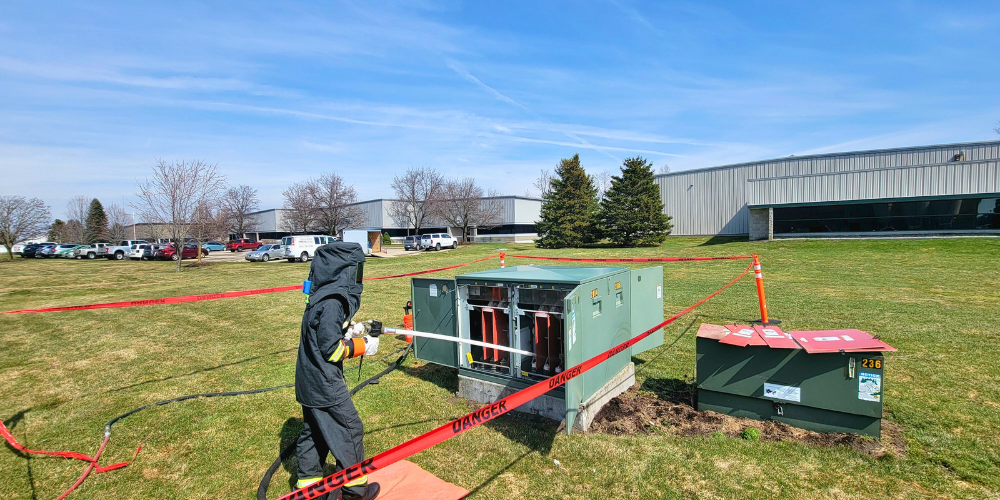
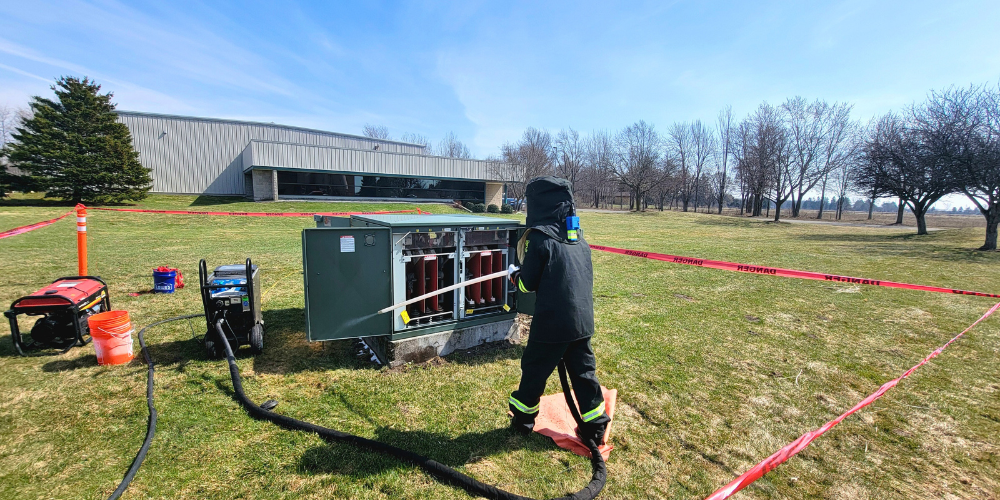
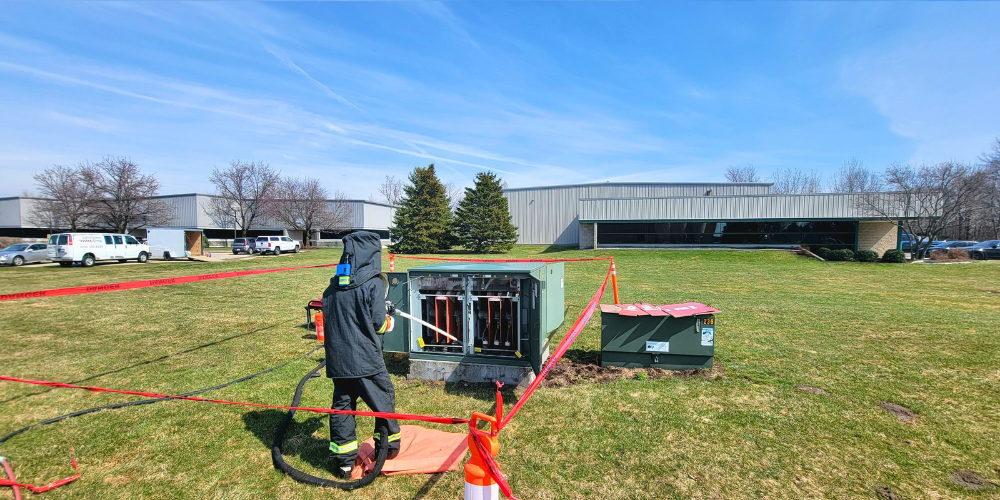
Because it introduces no moisture, equipment can often be cleaned and returned to service in a fraction of the time. Projects that once took multiple shifts or days can now be completed in hours.
This reduction in downtime has a direct financial impact. Facilities avoid the cost of temporary power generation and minimize disruption to operations. It also makes it feasible to implement more frequent preventive maintenance, further reducing long term risk.
Preventing Flashover Before It Starts
Flashover prevention is where dry ice blasting delivers its most critical value. Instead of reacting to failures after they occur, this method addresses the root cause.
By removing conductive contaminants, the process restores the dielectric strength of insulation systems. This significantly reduces leakage currents and prevents the formation of tracking paths that lead to arcing. In some cases, leakage currents have been reduced by more than ninety six percent following cleaning.
Additionally, dry ice blasting removes carbon deposits and residue left behind by previous electrical events, helping to restore equipment after incidents and prevent recurrence.
The result is a safer operating environment with a dramatically lower risk of catastrophic failure.
Industrial Cleaning Without Compromise
Modern substations demand cleaning solutions that do not introduce new risks while solving existing problems. Dry ice blasting meets this requirement in several key ways.
It is non abrasive, preserving sensitive components such as insulation, wiring, and coatings. It is non conductive, reducing the risk of unintended electrical interactions during cleaning. It produces no secondary waste, eliminating cleanup concerns and environmental impact.
Because the process can reach into tight spaces and complex geometries, it provides a more thorough clean than manual methods or compressed air alone.
These characteristics make it an ideal solution not only for substations but for a wide range of industrial cleaning applications where precision and safety are critical.
A Smarter Maintenance Strategy for Modern Infrastructure
The shift toward dry ice blasting reflects a broader change in how facilities approach maintenance. Instead of viewing cleaning as a reactive task, operators are recognizing it as a strategic investment in performance and reliability.
Preventive cleaning with dry ice blasting Michigan allows facilities to maintain peak efficiency while avoiding costly failures. It also aligns with sustainability goals by reducing the need for chemicals and minimizing waste.
For companies looking to optimize their operations, this approach offers a clear advantage. It turns maintenance from a cost center into a driver of performance improvement.
Where Strength Meets Precision
Companies like Strength H2O are helping lead this transition by bringing advanced dry ice blasting solutions to critical infrastructure environments. With a focus on industrial cleaning and electrical safety, their approach combines technical expertise with proven methods that deliver measurable results.
From restoring lost efficiency to reducing the risk of flashover events, the impact of proper cleaning extends far beyond surface level improvements. It directly influences the reliability of power delivery and the safety of those who depend on it.
The Future of Substation Performance Starts With Clean Equipment
As energy demand continues to rise, the importance of efficient and reliable substations becomes even greater. Every watt counts, and every risk matters.
Dry ice blasting offers a powerful way to address both challenges at once. By removing the invisible contaminants that cause energy loss and electrical hazards, it unlocks performance that would otherwise remain out of reach.
The result is not just cleaner equipment, but stronger, safer, and more efficient power systems ready to meet the demands of the future. Dry ice cleaning substations and switchgears is the most efficient and cost effective solution for cleaning available on the market today.