
Is Your Michigan Facility Dust Free?
Is Your Michigan Facility Truly Dust Free—or Just “Good Enough”?
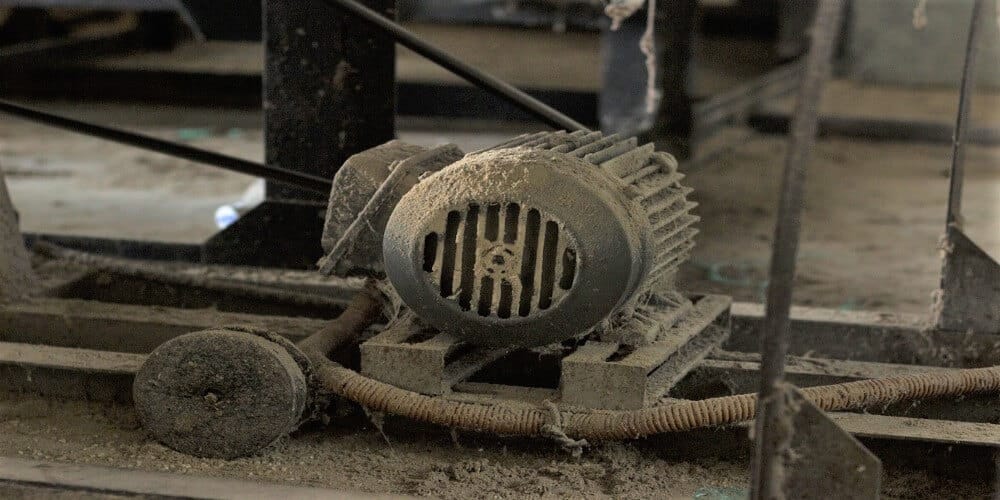
If you own or manage a warehouse, distribution center, or manufacturing facility in Michigan, dust is part of daily life. It settles quietly on rafters, beams, ductwork, lighting, and high ledges areas that are rarely seen from the production floor. While it may appear harmless at first, dust accumulation is far more than a cosmetic issue. Is Your Michigan Facility Dust Free? Many Michigan facilities believe they are “dust free” simply because floors are swept and workstations are wiped down. In reality, the majority of airborne dust never settles where it is easily visible. It migrates upward, clinging to overhead structures, where it continues to circulate through your building day after day.
Why Dust Is a Bigger Problem in Michigan Facilities
Michigan’s manufacturing and warehousing environments face unique challenges when it comes to dust. Seasonal weather changes, temperature fluctuations, and increased HVAC usage during cold months all contribute to airborne particles being redistributed throughout a facility. Add in high production volumes, forklift traffic, packaging materials, and raw product handling, and dust becomes unavoidable.
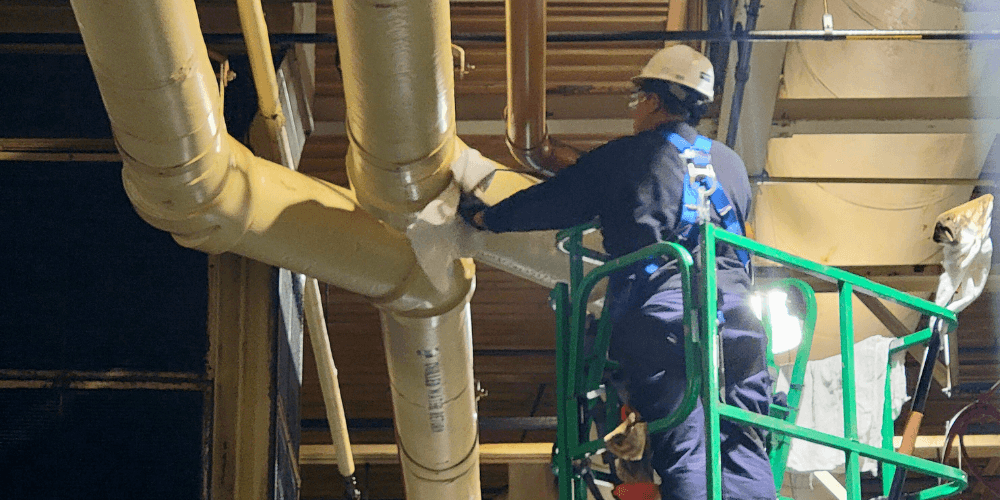
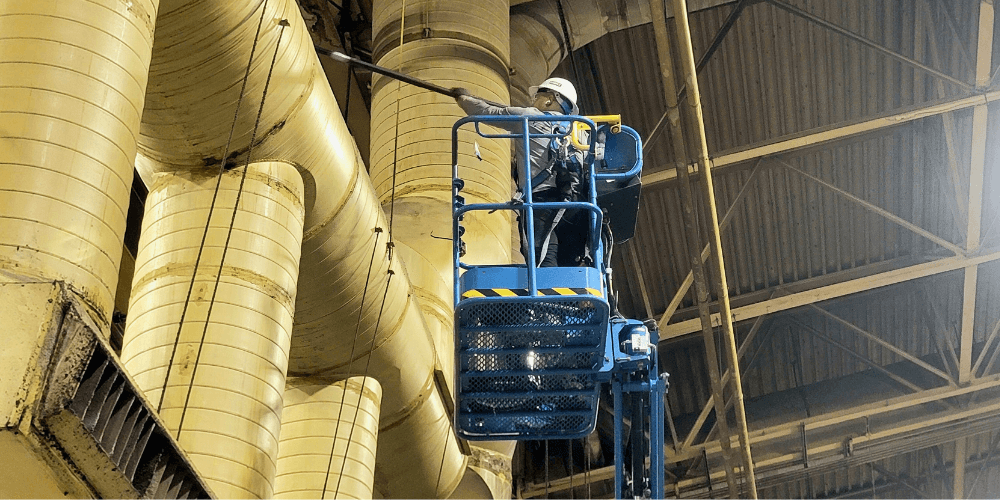
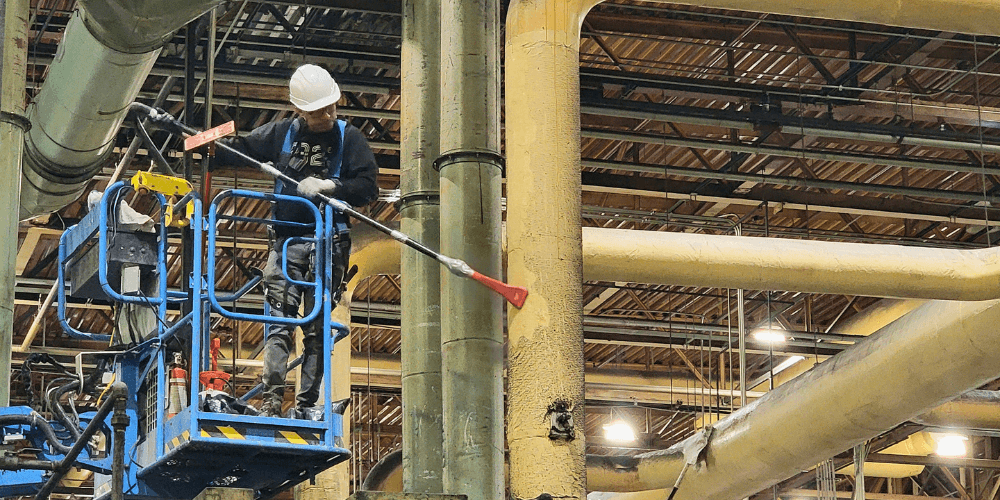
What makes dust particularly dangerous is its ability to accumulate unnoticed. Hard-to-reach areas such as ceiling trusses, cable trays, sprinkler systems, and ventilation ducts can hide years of buildup. Facility managers often worry about how to remove dust from these areas without disrupting production schedules or risking worker safety. Traditional cleaning methods simply aren’t designed for elevated surfaces.
The Hidden Dangers of Michigan Combustible Dust
One of the most overlooked risks in Michigan facilities is combustible dust. Certain types of dust such as those created from wood, metals, food products, plastics, or chemicals can ignite under the right conditions. When dust accumulates on high surfaces, it creates the perfect environment for a flash fire or explosion if disturbed.
Even facilities that don’t handle obviously combustible materials can still be at risk. Fine particulate matter can accumulate in layers, and when those layers are disturbed by vibration, airflow, or maintenance work, they become airborne again. Proactive Michigan combustible dust cleaning plays a critical role in reducing this risk before it becomes a serious incident.
High Ceiling Cleaning: More Than Just Appearance
Michigan high ceiling cleaning is not just about making your facility look cleaner it’s about protecting people, products, and infrastructure. Dust inhalation is a serious health hazard that can irritate the skin and sensitive membranes of the eyes, nose, and throat. Over time, repeated exposure may aggravate asthma, sinus conditions, and other respiratory issues among employees.
Beyond health concerns, dust can cause long-term damage to your facility itself. When high ceiling cleaning is neglected, dust can harden onto surfaces, stain paint, and permanently discolor building materials. Lighting efficiency can decrease as fixtures become coated, making work areas dimmer and increasing energy costs as systems work harder to compensate.
How Dust Impacts HVAC and Air Quality
Dust accumulation doesn’t stay put. It continuously cycles through your HVAC system, reducing efficiency and spreading contaminants throughout the building. Overloaded filters, blocked vents, and contaminated ductwork force systems to work harder, increasing wear and energy consumption.
Poor indoor air quality doesn’t just affect comfort it directly impacts productivity. Employees working in dusty environments often experience fatigue, headaches, and increased allergy symptoms. Regular rafters cleaning Michigan helps break this cycle by removing dust at the source, rather than allowing it to recirculate endlessly.
Compliance, Audits, and Industry Standards
For many Michigan facilities, cleanliness is not optional it’s required. Regulatory agencies, third-party auditors, and customers all expect facilities to meet specific cleanliness standards. Dust buildup on overhead surfaces is one of the most common issues cited during inspections because it is so frequently overlooked.
High dusting supports Good Manufacturing Practices and helps demonstrate a commitment to safety, quality, and operational excellence. Facilities that stay ahead of cleaning requirements are far less likely to face costly violations, production shutdowns, or failed audits.
Long-Term Protection for Your Products and Equipment
Dust doesn’t discriminate. It settles on finished goods, raw materials, packaging, and sensitive equipment alike. Over time, this contamination can lead to product defects, rejected shipments, and increased maintenance costs. Machinery exposed to heavy dust buildup often experiences premature wear, overheating, or unexpected failures.
By investing in professional high ceiling cleaning, Michigan facilities protect their assets and extend the life of critical equipment. Clean overhead spaces reduce the risk of dust falling onto production lines, storage areas, or clean zones.
The Real Benefits of Michigan High Ceiling Cleaning
Regular high dusting and ceiling cleaning offers measurable benefits that go far beyond surface-level cleanliness:
- Improves overall indoor air quality
- Supports Good Manufacturing Practice requirements
- Helps meet cleaning standards and regulatory expectations
- Promotes a safer, healthier work environment
- Reduces allergic reactions and respiratory irritation
- Protects products, equipment, and building materials from damage
A Smarter Approach to Facility Cleanliness
Addressing dust at ceiling level requires specialized equipment, trained personnel, and a strategic approach that minimizes disruption to daily operations. Professional Michigan high ceiling cleaning allows facilities to stay productive while eliminating one of the most persistent and dangerous forms of contamination.
Instead of reacting to dust after it becomes a problem, forward-thinking facility managers treat high dusting as a preventive maintenance strategy. When overhead areas are kept clean, the entire facility benefits from the air employees breathe to the products leaving the building.